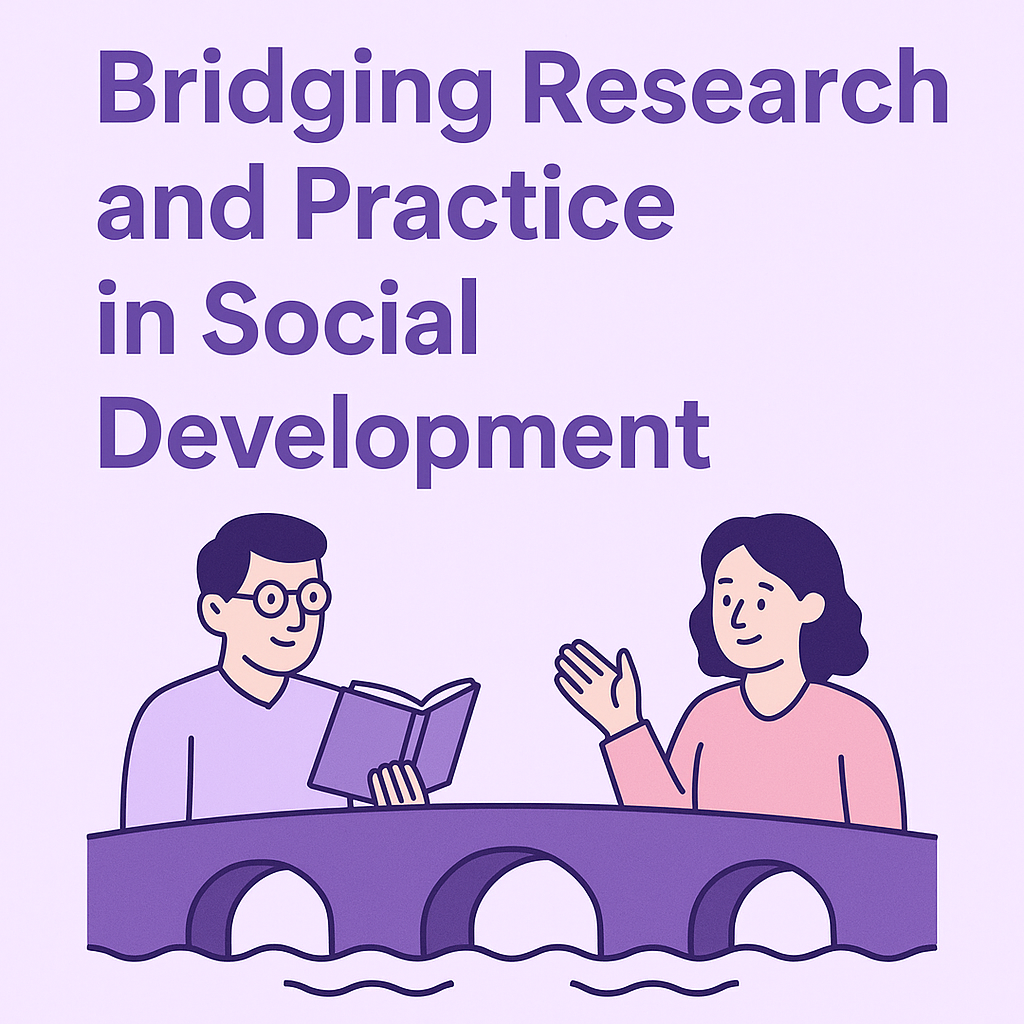
One of the most common frustrations I hear in the development sector is this: “There is so much research, but so little of it reaches the people making decisions on the ground.” At the same time, many researchers feel their work is reduced to a single line in a policy document or a report that nobody reads. Somewhere between academia and practice, valuable knowledge gets lost.
As someone who works both in NGOs and in academia, I see this gap every day. In the field, we are under pressure to deliver quick results and visible outputs. In the university, we are under pressure to produce rigorous analysis and publish in journals. Both are important, but the timelines, languages, and incentives are often very different.
So how do we bridge this gap?
First, research questions need to be grounded in real problems faced by communities and practitioners. Instead of starting with, “What can I publish?”, we can start with, “What do local actors need to understand better in order to act more effectively?” When research is co-designed with those who will use it, the findings are more likely to be applied.
Second, we need better ways to communicate evidence. A 200-page report is not always helpful for a community organizer or a local government official with limited time. Sometimes what they need is a short brief, a visual summary, a checklist, or a community workshop where findings are discussed in simple language. Translating research is not “watering it down”; it is making it usable.
Third, practitioners and communities should be recognized as knowledge holders, not just data sources. Their experiences, failures, and innovations are a form of evidence too. When we bring academic research and local knowledge into conversation, we get a fuller picture of what works, what doesn’t, and why.
Finally, we should accept that not every research finding will be immediately “useful” in a project or policy. Some of it simply helps us understand the world more deeply. But even then, creating spaces where researchers, NGOs, and communities can talk to each other—without the pressure of a project deadline—can slowly reshape how we think about development.
Bridging research and practice is not a one-time task; it’s an ongoing relationship. It requires patience, trust, and a willingness to learn from each other. But if we are serious about social change, it is a bridge we cannot ignore.